
TPWallet Reviewed: Balancing Smart-Pay Security, Mnemonics and the New-Coin Era for a High‑Performance Digital Economy

TPWallet sits at the junction of practical wallet ergonomics and emerging infrastructure ambitions. This review-style analysis compares TPWallet’s operational model and security posture against mainstream alternatives (MetaMask, Trust Wallet, hardware wallets) while exploring broader implications for intelligent payments, mnemonic safety, nascent token launches and the high-performance digital economy.
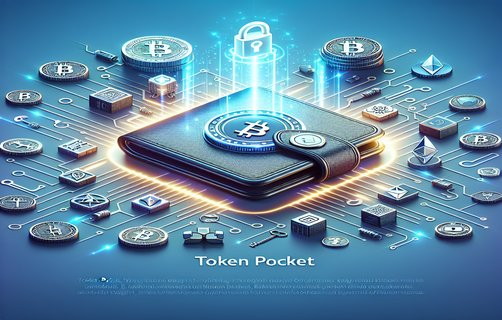
Operational snapshot and comparative takeaways
TPWallet’s onboarding mirrors mobile-first wallets: seed creation, optional biometric unlock, network selection and dApp connection. Where it diverges is in usability tradeoffs—clean UX and gasless abstractions versus fewer advanced customization options than MetaMask. Compared with hardware wallets, TPWallet favors convenience over air-gapped signing; compared with custodial apps it preserves user control by default. For users who prioritize day-to-day DeFi and NFT interactions, TPWallet’s flow is competitive; for cold-storage maximalists, a hardware wallet still leads.
Intelligent payment security
TPWallet blends several modern defenses. Local cryptography and optional secure enclave use protect keys against common mobile attack vectors; transaction preview and permit-style approvals reduce blind-sign risk. Critically, TPWallet’s native risk-scoring (behavioral heuristics + whitelisting) outperforms simple permission prompts seen in lighter wallets, but it does not fully replace MPC-based multi-sign or hardware-backed cold storage. Against MetaMask’s widespread exposure, TPWallet’s contextual prompts and prompt-based rollback options present a better UX-security balance, though high-value custody still benefits from hardware or MPC solutions.
Mnemonic phrase practices
The wallet preserves the standard 12–24 word seed model. Compared to custodial recovery or social-recovery schemes, a lone mnemonic remains the single point of failure. TPWallet offers best-practice guidance—offline backup, encrypted cloud export, and split-shamir options—but users must opt in. For people migrating from password managers, TPWallet’s emphasis on deterministic seeds and explicit offline backups is robust; still, power users should layer Shamir or social recovery to mitigate theft or loss.
New coin issuance and token integration
When projects list their “new coin” via TPWallet-integrated swaps or in-wallet launchpads, tokenomics transparency matters. TPWallet’s in-app token detail pages and contract links reduce phishing risk compared to open DEX UIs, but the depth of vetting varies. For early-stage tokens, independent verification and on-chain audits remain essential. Compared to wallets that limit token discovery, TPWallet strikes a middle ground—enough discovery to participate, with modest guardrails against rug-pulls.
Future tech applications and industry trajectory
TPWallet is positioned to adopt Layer2, zk-rollups, and account abstraction quickly thanks to its modular design. Account abstraction would enable gasless sponsored payments, programmable recurring transfers and safer approval flows—features that directly bolster intelligent payment use-cases (IoT micropayments, streaming wages, subscription primitives). As CBDCs and regulated rails emerge, wallets that support hybrid identity and privacy-preserving proofs will gain trust. TPWallet’s current roadmap toward cross-chain composability and guarded smart-contract wrappers aligns with the broader industry push for interoperability and higher throughput.
High-performance digital economy implications
A scalable wallet UX that supports batching, gas-optimization and meta-transactions is central to real-world digital commerce. Compared to wallets that prioritize feature-minimal designs, TPWallet’s integrations (Layer2, gas relayers, and in-wallet swaps) create a smoother path to micropayments and merchant onboarding. The tradeoff is complexity: each added convenience increases the attack surface, so continued emphasis on risk scoring, optional hardware integrations and transparent governance will determine long-term viability.
Practical verdict
TPWallet achieves a pragmatic balance: superior day-to-day usability and promising security features without fully replacing dedicated cold-storage or enterprise MPC solutions. For individuals and small teams participating in DeFi, NFTs and upcoming token launches, it offers a capable operational toolset. For custodians of large value or regulated entities, layering dedicated hardware or MPC remains recommended. The wallet’s future depends on how it integrates account abstraction, Layer2 scaling and robust recovery models while keeping phishing and new-coin exposure under control.
评论
Maya Chen
很实用的对比,尤其是对助记词和社恢复的建议让我重新考虑备份策略。
OliverW
Good run-through of security trade-offs. Would like a deeper dive on MPC plans for TPWallet.
张子墨
关于新经币的审查提醒到位,实在是早期项目一定要多做链上验证。
Harper Li
Clear, pragmatic—helped me choose between TPWallet and a hardware wallet for daily use.